Travel information Italy for motorcycle tours

Everything you need to know before your Italy tour: passes, ZTL zones, tolls, ferries to the islands, and the best time to go, from a rider's perspective.

One more question about Italy?

Visa, entry, season or route – in the live chat we usually reply within 3 minutes.

The essentials on Italy at a glance

Updated: August 2026

Visa
EU/EEA/Switzerland: a national ID card is enough, no visa needed
Non-EU citizens usually visa-free up to 90 days in 180 days (Schengen), passport required
Passport
EU citizens: a national ID card is enough, no minimum validity. Non-EU: passport must be valid at least 3 months beyond the return date
Best season
April to June and September to October; Alpine passes open only from late May/June
Currency
Euro (EUR)
Time zone
UTC+1 (CET), daylight saving UTC+2
Traffic
Right-hand traffic
Helmet & gear
Helmet mandatory (ECE 22.05/22.06); protective clothing not required by law
Main route
A22 Brenner motorway, SS48 Grande Strada delle Dolomiti
Fuel
Unleaded 95/98 and diesel available nationwide, dense fuel station network
Intl. driving permit
Not required for EU/EEA/Swiss licences; recommended to mandatory for non-EU licences depending on home country

Entry

Entry & Visa for Italy

As an EU member, entering Italy is a mere formality for most Europeans.

EU/EEA/Switzerland (national ID card)

Stay
Unlimited (freedom of movement)
Cost
none
Where to apply
No application needed
Validity
As long as the ID card is valid

Non-EU, visa-free (USA, UK, CA, AUS and others)

Stay
Up to 90 days per 180 days
Cost
none
Where to apply
No application, passport check on entry
Validity
90 of 180 days across the whole Schengen Area

Schengen visa (short stay, type C)

Stay
Up to 90 days per 180 days
Cost
approx. 90 euros (adults)
Where to apply
Italian embassy/consulate before travel
Validity
As stated on the visa, usually 90 of 180 days

Your own EU-registered motorcycle

Stay
Unlimited
Cost
none
Where to apply
No customs formalities within the EU
Validity
Normal registration is enough

Your own bike

Bringing Your Own Motorcycle to Italy

As an EU country, Italy is a mere formality for an EU-registered motorcycle. It only gets serious once you reach a city.

Checklist for the border

  • Original vehicle registration document (Teil I)
  • Driving licence, plus an international driving permit for non-EU licences
  • Proof of insurance or Green Card, ready digitally
  • For a borrowed motorcycle: written authorisation from the registered owner
  • Check the route in advance: avoid ZTL-restricted city centres, or arrange a permit
  • Plan for toll category A (motorcycle); carry change or a card for toll stations
  • Book a ferry ticket to Sardinia or Sicily in advance during peak season

A borrowed motorcycle with no written authorisation from the owner is the most common trip-up at a checkpoint. The paperwork costs nothing and can save a long roadside discussion if it comes to that.

Documents

Licence and Documents

An EU licence is enough. For non-EU licences, it depends on the home country.

  • EU licence category A/A2/A1 in card format
  • International driving permit for non-EU licences, if required by the home country
  • Passport or national ID card, depending on nationality
  • Original vehicle registration document (Teil I)
  • Proof of insurance or Green Card
  • Copies of all documents, stored separately from the originals

Season

Best Time to Travel & Climate in Italy

Italy can be ridden almost year-round; what matters is the region: Alpine passes only in summer, the south for almost the whole year.

Best season: April to June & September to October

Rideability by month and region
Region Jan Feb Mar Apr May Jun Jul Aug Sep Oct Nov Dec
Alps & Dolomites Jan: Not rideable Feb: Not rideable Mar: Not rideable Apr: Not rideable May: Rideable, with limits Jun: Best riding window Jul: Best riding window Aug: Best riding window Sep: Best riding window Oct: Rideable, with limits Nov: Not rideable Dec: Not rideable
Central Italy (Tuscany, Umbria) Jan: Rideable, with limits Feb: Rideable, with limits Mar: Best riding window Apr: Best riding window May: Best riding window Jun: Rideable, with limits Jul: Rideable, with limits Aug: Rideable, with limits Sep: Best riding window Oct: Best riding window Nov: Rideable, with limits Dec: Rideable, with limits
Southern Italy & Islands (Sicily, Sardinia) Jan: Rideable, with limits Feb: Rideable, with limits Mar: Best riding window Apr: Best riding window May: Best riding window Jun: Rideable, with limits Jul: Rideable, with limits Aug: Rideable, with limits Sep: Best riding window Oct: Best riding window Nov: Best riding window Dec: Rideable, with limits
  • Best riding window
  • Rideable, with limits
  • Not rideable
In spring and early autumn, temperatures are balanced across Italy, the Alpine passes are open and the south isn't too hot yet. In high summer, southern Italy gets very hot, and in winter the Dolomite passes are closed.
Matching departures in Italy The best window is April to June & September to October. See the tours that start within it. Tours in Italy

Roads & tracks

Road Conditions & Driving in Italy

From the motorway to the mountain pass: Italy's road network is excellent, once you know the tolls and the driving restrictions.

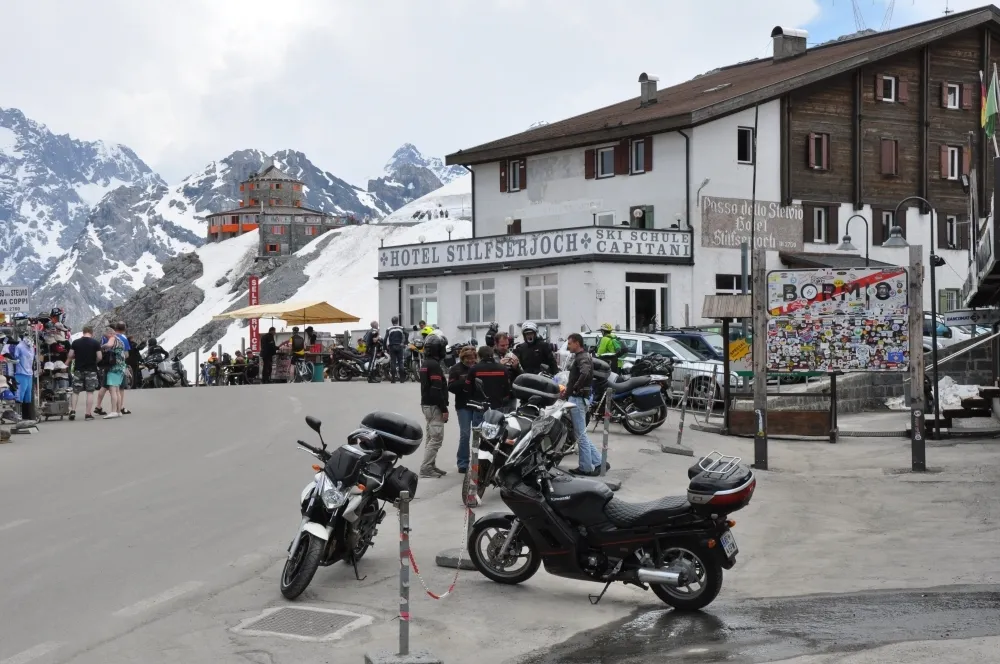
Passo dello Stelvio (Stelvio Pass), Prato allo Stelvio to Bormio

100 % Paved

Condition
Fully paved, 48 hairpins on the eastern ramp, very tight and heavily used in peak season
After rain
Fog and cold possible even in summer, short-notice closure possible after fresh snow
Daily distance
Half a day to a full day to cross the pass with photo stops
Fuel
Bormio and Prato allo Stelvio, none in between
Passes & altitude
Stelvio Pass 2,757m, seasonally closed (open roughly mid-May to mid-November, depending on snow conditions)
Permits
none

Passo di Gavia & Passo del Mortirolo, Bormio to Ponte di Legno/Edolo

100 % Paved

Condition
Narrow, partly single-lane with passing bays, very winding
After rain
Fog at the summit; wet surfaces on the tight hairpins significantly increase the risk of slipping
Daily distance
Both passes together make a good day's ride with breaks
Fuel
Bormio and Ponte di Legno, none in between
Passes & altitude
Gavia Pass 2,621m, open roughly June to October; the Mortirolo is right next to it, with a similar season
Permits
none, but coaches and vehicles over 3.5t are banned on the Gavia Pass

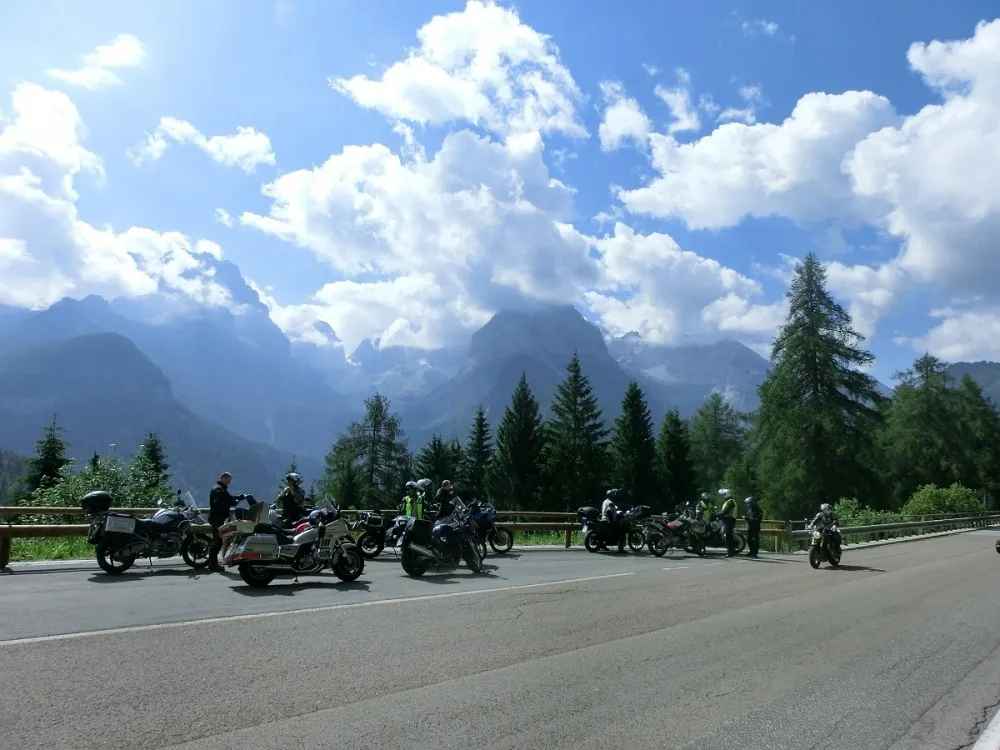
Grande Strada delle Dolomiti (SS48), Bolzano/Canazei to Cortina d'Ampezzo

100 % Paved

Condition
Fully paved, taking in the Sella, Gardena, Pordoi and Falzarego passes along the way, heavily used in peak season
After rain
Fog at the summits; short thunderstorms are typical on summer afternoons
Daily distance
One day for the full loop (Sellaronda) with photo stops and breaks
Fuel
In every larger town along the route
Passes & altitude
Several passes above 2,000m, all open only from early summer to autumn, exact opening dates depend on snow conditions
Permits
none

Amalfi Coast (SS163), Sorrento to Salerno

100 % Paved

Condition
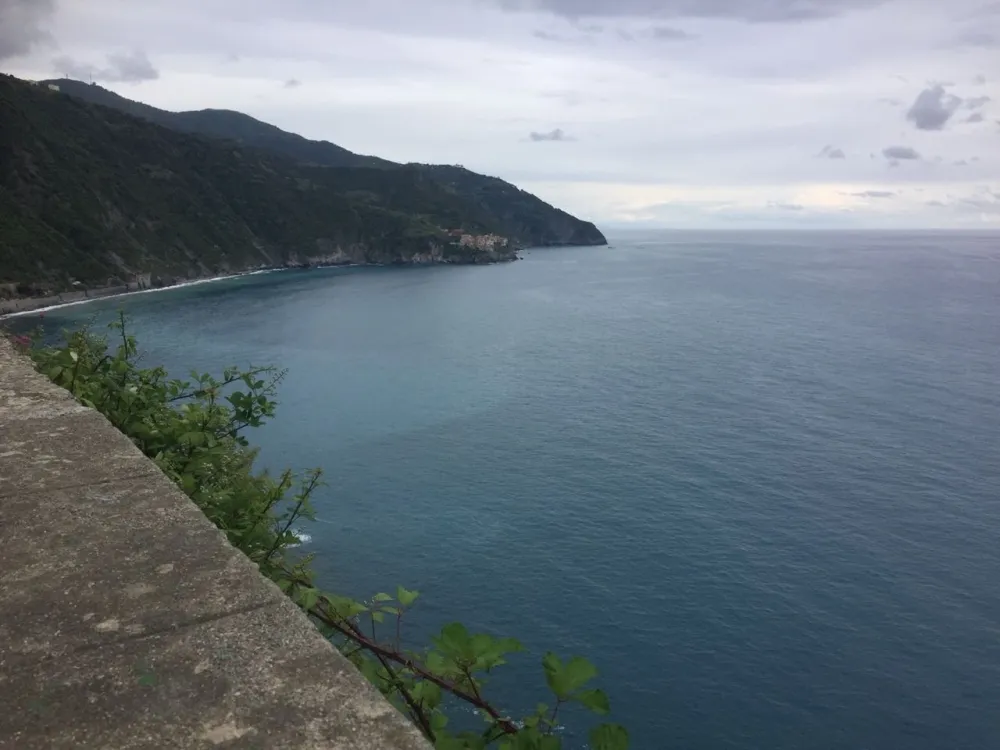
Narrow, extremely winding, right along the cliff coast, clogged with tour coaches and rental cars in peak season
After rain
Rockfall possible after heavy rain, the road is then temporarily closed
Daily distance
50km as the crow flies, but a full day's ride through the towns and traffic
Fuel
In the coastal towns, usually with tight parking
Passes & altitude
No summit, but continuously winding at sea level
Permits
none

Fuel

Fuel and Range in Italy

Fuel stations are plentiful, but pricier than you'll be used to from Germany, and self-service pays off.

Benzina senza piombo 95

Availability
Nationwide
Note
Standard for most touring and adventure motorcycles

Benzina senza piombo 98/100

Availability
Larger towns and motorway service areas
Note
Not reliably available everywhere

Gasolio (diesel)

Availability
Nationwide
Note
Relevant for support vehicles

Self-service (fai da te)

Availability
At most stations, including by machine at night
Note
Noticeably cheaper than attended service (servito)

Safety

Safety on the Road in Italy

Italy is safe for travellers. The real risk is the traffic, and your own number plate ending up in a ZTL zone.

Emergency numbers

  • European emergency number (police, fire brigade, ambulance) 112
  • Polizia di Stato 113
  • Vigili del Fuoco (fire brigade) 115
  • Emergenza Sanitaria (ambulance service) 118

Health

Health & Vaccinations

No mandatory vaccinations for Italy, but as everywhere in Europe, it's worth checking your own insurance policy.

  • Refresh your tetanus and diphtheria vaccinations
  • Carry the European Health Insurance Card (EHIC)
  • First-aid kit suited to falls
  • Personal medication with a copy of the prescription
  • Check that your travel health insurance covers mountain rescue and motorcycling

Many travel health insurance policies, and the EHIC too, don't cover helicopter mountain rescue, which can quickly become necessary on Alpine passes after a fall. Check this before booking, not once you're already on the mountain.

Packing list

Packing List for Italy

Only what Italy additionally requires. The general motorcycle packing list is assumed.

  • Change or a card for toll stations (class A)
  • European Health Insurance Card (EHIC)
  • Check the route through old towns in advance; route around ZTL zones or arrange a permit
  • Book a ferry ticket to Sardinia or Sicily in advance, if planned
  • Written authorisation from the owner for a borrowed motorcycle
  • Offline maps for Alpine passes and remote mountain regions

Subscribe to World Travel News

Get the latest travel news from around the world – reports, tips and adventures. No promotional content, just real travel inspiration.

Categories of interest

Thanks for subscribing!

You'll receive a confirmation by email shortly.

Send enquiry

Tell us what you're planning – we'll get back to you personally and without obligation.

We use cookies

We use cookies to make your journey on our site as pleasant as possible. You can find details in our privacy policy.